
A staircase is one of the most frequently used elements in a home, yet when it is properly designed and installed, it should attract attention for its appearance, not for every footstep.
Precision beneath the surface.
Every staircase is made up of multiple components that must work together. Treads, risers, strings, newel posts and balustrades all respond to regular use, changes in temperature and variations in humidity. Even a minor gap between two components can create friction and movement. Over time, that movement becomes the familiar creak heard whenever someone walks upstairs.
Accurate measurements and properly prepared connections help distribute weight evenly throughout the structure. Secure fixings, suitable adhesives and carefully controlled tolerances reduce unnecessary movement without preventing the timber from responding naturally to its environment.
The best compliment a staircase can receive is that nobody notices it working.
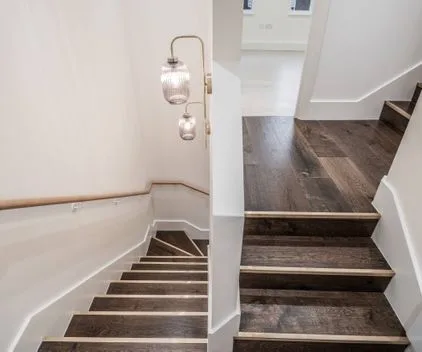
Quality you can feel
The best craftsmanship is not always the most visible. It can be felt in the stability of a handrail, the consistency of every step and the absence of movement beneath your feet.
At Skylon Construction, we believe that details concealed within the finished build deserve the same attention as the surfaces everyone sees. A staircase should feel solid, considered and naturally connected to the rest of the property. And when you walk across it, it should whisper.
Back to Journal